How to Make a Full Cast Audiobook With AI Voices
Alek Karp
Co-founder
Share this article
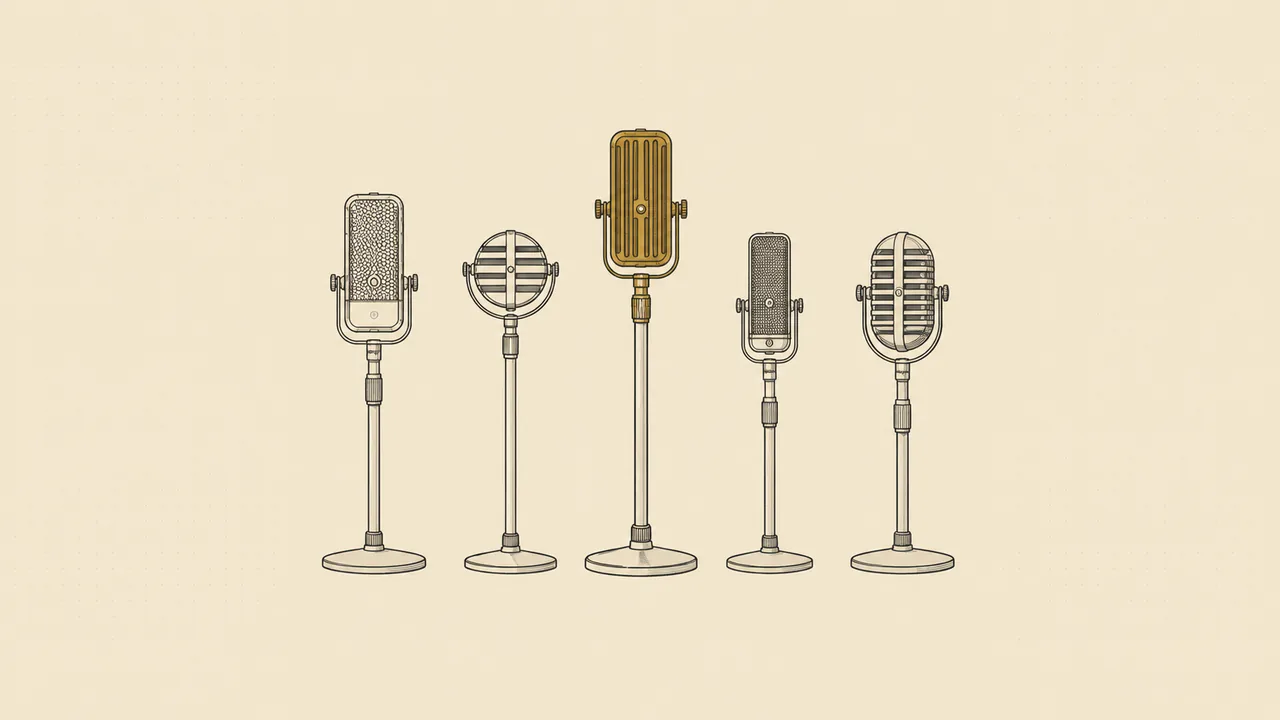
How to make a full cast audiobook with AI voices: tag every speaker, cast stable voices, direct scene by scene, master to spec, and disclose AI narration.
Introduction
A full cast audiobook with AI voices gives each major character a distinct synthetic voice, while a narrator voice carries the exposition. Dialogue plays as a scene instead of one reader doing impressions. To make one, tag every speaker, cast a stable voice for each, direct line by line, and master to retailer spec.
Casting a book this way used to be a luxury. The expensive part of a human cast is booth time. A narrator takes 2 to 4 hours in the booth per finished hour (edited, ready-to-publish audio, roughly 9,300 words).
Every added narrator books their own sessions, and AI voices remove the booth entirely. The market is worth the effort. US audiobook sales reached $2.43 billion in 2025, up 9%, per the Audio Publishers Association's APA 2025 sales survey.
This guide is for indie authors with dialogue-heavy fiction. You'll learn when a cast beats one narrator and why AI voices drift across a long read. Then come the production steps, the cost math, where the book can sell, and the consent rules for cloned voices.
Our position fits in one line. The voice is AI, the performance is human. A cast is a casting and directing problem first, and the engine is only where the work starts.
What a Full Cast AI Audiobook Is, and When It Beats One Narrator
A single narrator voices the narration and every line of dialogue. A full cast gives each major speaker a voice of their own, and a narrator voice may still carry the exposition. One narrator fits most fiction and nonfiction.
A cast works when distinct characters carry long stretches of dialogue, per our guide on how to cast and direct an AI narrator. That points to thriller, romance, fantasy, and ensemble novels, while memoir and how-to usually stay single voice. Keep voices apart through pace and weight, because cartoon accents and theatrical overacting wear thin over ten finished hours.
Why Character Voices Drift (and Which Voices Hold)
Long-form text-to-speech is rendered in chunks, and most models start each chunk cold. A seam is the join between two of those chunks, and the voice can change at every one. In a cast, it can change between paragraphs of the same character.
We measured it in our write-up on why AI narrators change voice. Listeners notice a pitch jump around 20 Hz, and raw joins drifted 30–48 Hz. With request stitching and take selection, every join held within 15 Hz.
Fixing seams after the fact is slow, so screen voices before you render a book. Our cold-start voice probe renders the same sentence three times and measures how far the voice moves. Under 3% drift is locked, 3–5% is workable, and over 10% is audible at every seam.
For scale, 6% is one semitone. Across the 188 voices we screened, the worst drifted 16% and the best 1.3%. That spread is why a voice that sounds great in one sample can fail over a full chapter.
Character voices drift more than voices cloned from studio narration. That matters more in a cast, because a cast has more voices to hold across the whole book. Each extra character is one more voice that can wander.
So which AI voice is most realistic? The stable one on your text, whatever the best demo sounds like.
Stability is also the gap between a generator and a production. A raw engine reads a chapter and stops, while a production casts, directs, retakes, and masters.
How to Produce a Full Cast Audiobook With AI Voices
You can get a cast from a platform's auto-narration or from a directed production, and some authors build one themselves on a raw engine. The table shows who does the work on each route and what you leave with.
| Route | Who casts and directs | What it covers | What you leave with |
|---|---|---|---|
| Google Play Books auto-narration | You assign voices to detected characters | Character voices, English only | A Google Play Books audiobook |
| Raw TTS engine, DIY | You | Rendering only; casting, seams, and mastering are yours | Raw files you still have to fix and master |
| Directed production (Lex Publisher) | A dedicated producer | Full cast, direction, scoring, mastering, and distribution | Masters you own, listed on Audible, Spotify, and more than twenty stores |
The platform route has limits. Google, in its Google Play character voices guide, says the feature is currently only available for English audiobooks. Text not assigned to a character goes to the default narrator, so attribution still decides the result.
The four steps below follow a directed production. They also work as a checklist if you take the DIY route.
Step 1: Tag Every Speaker in the Manuscript
A cast can only perform lines it can attribute. Label every speaker consistently, either as CHARACTER: before the line or as quoted dialogue with clear attribution. Pick one convention and hold it for the whole book.
Then trim the tags the cast now performs. "She said shyly" can go when the voice already plays it shy and the line still reads cleanly. Keep any tag the scene needs to make sense on the page.
Last, build a pronunciation glossary for every name and invented word. A cast multiplies the voices that can get a name wrong. On our productions, the producer checks names and pronunciation against the manuscript before you hear a word.
Step 2: Cast on Your Own Text
Audition short passages from the book itself. For a cast, use a dialogue scene where the characters trade lines, so you hear the voices against each other. Pick each voice for the whole book rather than its loudest scene.
Probe every character voice for drift before you lock the cast. Keep the narrator the most stable voice of all, since it carries the most hours. A character who appears in three chapters can tolerate more movement than the voice reading every page.
Lex casts from millions of candidate voices across models, with a distinct voice per character. Some authors want their own voice as narrator, and we can clone it. A cloned voice is a private model used only for its book, not shared, sold, or reused for other clients.
Step 3: Direct Scene by Scene, Then Retake
Direction starts at the scene. Write notes the way you'd give them to an actor ("slower here", "she's hiding something") and mark where the pauses fall. On our productions, a producer marks affect, pace, and pauses on every line before you hear the chapter.
When you review, flag one note per issue with its location, chapter and timestamp. Bundled notes get half-fixed. Then retake the line and leave the rest of the chapter alone.
Retakes are where a cast comes together. Two characters arguing need timing between them, and a single retaken line can fix a whole exchange. The voice is AI, the performance is human, and the performance lives in those retakes.
Step 4: Score Lightly and Master to Spec
Score a cast lightly. Keep music well under half the runtime and around 20 dB under the voice. Leave dense dialogue dry so the characters stay clear.
Lex licenses 55,000 tracks and 250,000 sound effects, and we are the first audiobook publisher licensed to use the Epidemic Sound catalog. Engineers mix cues under the voice scene by scene, instead of laying one bed over a whole chapter. The voice always wins the mix.
Mastering to retailer spec means loudness between −23 and −18 dB and a retail sample under 300 seconds. To hear a directed cast on your own pages, start with a free first chapter. You get a finished first-chapter demo within 24 hours, free.
Cost, Reception, and Where a Full Cast AI Audiobook Can Sell
Craft decides whether listeners finish the book. Money and shelves decide whether you can make it at all, and whether anyone finds it.
What a Cast Costs: AI vs. Human
Human narration costs $200 to $400 per finished hour, plus $75 to $150 per finished hour for editing, proofing, and mastering. A 75,000-word novel is about 8 finished hours. A human-narrated 75,000-word novel costs $2,400 to $5,850 produced, and that is with one narrator.
A human cast multiplies booth sessions, because each actor records their own lines on their own schedule. Our audiobook production cost breakdown walks through each line item. The point for a cast is simple: every voice you add on the human route adds paid booth time.
Lex prices by pack, flat, per book, paid once. The Voiceover pack is $49 one-time with 10 finished hours included, multi-voice casting, and an extra-hour rate of $5/hr. The Studio pack is $99 one-time with 10 finished hours included, fully scored, at $10/hr for extra hours.
A full cast sits on the Publisher pack: a custom quote per book, with 10 finished hours included. It adds everything in Studio plus multiple voices per book and done-for-you publishing everywhere, and extra hours are $20/hr. Every pack is laid out on Lex production pricing.
Run the math on two books. The 75,000-word novel at about 8 finished hours fits inside the 10 hours every pack includes. A 120,000-word fantasy runs about 13 finished hours, so on Publisher it adds 3 extra hours, or $60, to the quote.
Lex takes no royalties on the production fee. You own the finished masters and commercial rights, with zero exclusivity.
How Listeners React to AI Narration
Here is the honest headwind. Per the Audio Publishers Association's APA research on AI narration, willingness to try AI-narrated audiobooks fell from 70% in 2025 to 61% in 2026. The same APA data shows only 16% of audiobook listeners have heard an AI-voiced audiobook.
That data covers AI narration in general and says nothing about full casts. Most shoppers have never heard an AI production, so the retail sample has to do the selling. Disclose plainly, and let the sample show what the cast sounds like.
Listed is not the same as listened to. Spotify pays Premium-plan listening from its monthly pool by share of hours listened. A flat read that listeners skip earns little on a store that pays on listening time.
Where You Can Sell It, and How to Disclose It
Spotify accepts digital voice narration and adds a disclosure sentence to the book's description. Per its Spotify digital voice policy, Spotify doesn't currently share digitally narrated audiobooks with referral partners. The book needs its own Spotify upload.
Kobo requires a "Synthesised voice" contributor label plus a disclosure in the description, per its Kobo AI narration labeling rules. Google Play asks for "Synthesized voice". Apple reviews third-party AI audio title by title and may decline, and Lex submits and reports either way.
Audible is the catch. ACX self-serve still expects human narration, and ACX does not accept externally produced AI narration. On the Publisher pack, Audible goes under Lex's publisher agreement: a direct Lex upload, not a separate ACX project.
Audible is a wide, non-exclusive listing, so the exclusive Audible rate does not apply. The table shows disclosure and payout by store, with disclosure rules as of October 2026.
| Store | How AI narration is disclosed | What the author receives |
|---|---|---|
| Audible / Amazon | Direct Lex upload under Lex's publisher agreement | 30% of the sale price, Audible's non-exclusive rate since May 2026 (25% before); Audible sets the price |
| Spotify | Digital voice narration option; Spotify adds a description sentence | 50% of the price you set on à la carte sales |
| Google Play Books | "Synthesized voice" | 52% of list price, partner channel |
| Apple Books | "AI Generated" role; reviewed title by title | 45% of list price, partner channel |
| Kobo | "Synthesised voice" contributor plus description disclosure | 45% of list price at $2.99 and up, 35% below that, partner channel |
On partner channels, the distribution partner keeps 20% of net, deducted before remittance, and the author receives 80% of net. Lex takes no royalties and keeps nothing on any store. Our store-by-store AI narration guide covers each shelf in more depth.
Listings are non-exclusive, and any store can be pulled on 30 days' notice. Publisher sets the AI-narration disclosure wherever a store asks for it. For the libraries and the full channel list, see how Lex distributes wide.
Voice Cloning and Consent for a Cast
Never clone a real person's voice without their written consent. In July 2024, the U.S. Copyright Office recommended that Congress enact a federal law against knowing distribution of unauthorized digital replicas, per its Copyright Office digital replicas report. As of that July 2024 report, it was a recommendation to Congress, not law.
The safe path is licensed voices for every character, plus the author's own voice if you want a clone. Lex clones are private models used only for their book. Manuscripts are never used to train AI.
This section is general guidance. For a specific cast or contract, talk to a lawyer before you record.
Are There Other Full Cast Audiobooks Made With AI?
Yes. Our multi-voice audiobook samples include Damage Inc by Brett McKay, Rook's Awakening by K.A. Finn, and West Mesa Killers, which is on Spotify.
Is There an AI Audiobook Reader?
Yes, and it does a different job: a reader app reads text aloud for your own listening. A generator or a directed production makes audiobook files you can sell.
Does Spotify Use AI Voices for Audiobooks?
Spotify accepts AI-narrated audiobooks from authors who flag digital voice narration on upload, and it adds a disclosure line to the description. The store section above covers the referral-partner catch.
Do I Need to Disclose AI Narration?
Yes, every store that accepts AI narration asks for disclosure. Hiding it is the surest way to get a title in trouble.
Summary
A full cast audiobook with AI voices earns its place when dialogue carries the book. The rest is production discipline, and it decides what the listener hears.
- Cast only when distinct characters carry long stretches of dialogue.
- Probe every voice for drift and keep the narrator the most stable.
- Direct scene by scene and retake the line rather than the chapter.
- Score lightly and master to retailer spec.
- Disclose AI narration on every store that asks.
- Plan Audible around ACX, since self-serve does not accept externally produced AI narration.
What you keep is the point: one production fee, no royalty share, and masters you own. Your next step is to audition a cast on a dialogue scene from your own book and listen for drift at the seams.
Hear your first chapter free
Send the manuscript. We cast, direct, and score the opening and send it back in about a day. No card, yours to keep.
More to read
How to Market an Audiobook: A Producer's Launch Plan for Indie Authors
How to market an audiobook in order: fix the listing, choose your shelves, tell your readers, post clips, collect reviews, and pay for reach last.
Audiobook Pronunciation Guide for Narrators: What to Include and How to Write It
How to write an audiobook pronunciation guide for narrators: what to list, respellings that read at speed, and how to check the audio.