Is It Worth Making an Audiobook? The Math for Indie Authors in 2026
Alek Karp
Co-founder
Share this article
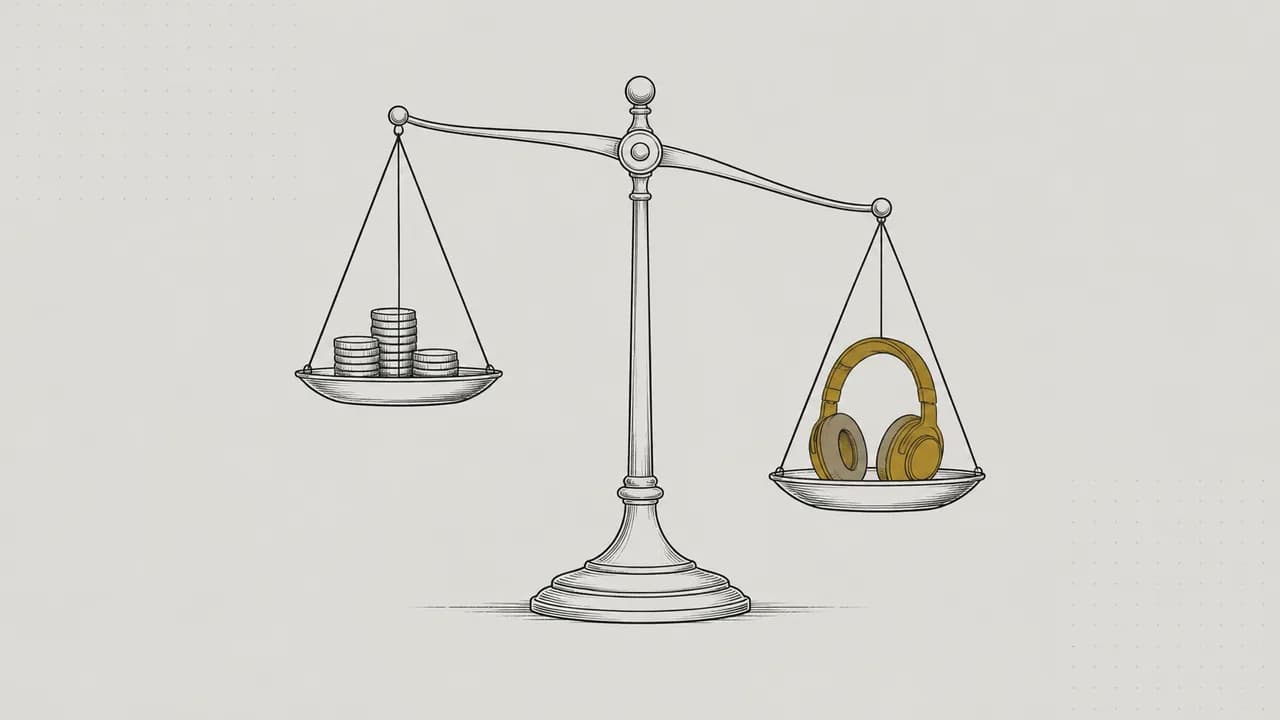
Is it worth making an audiobook? Compare production paths, royalty share, and store payouts, then run the break-even math on your own book.
Introduction
Every indie author with a finished book gets to the same question: is it worth making an audiobook? This guide is for self-publishers whose ebook or print edition already sells and who want to know whether audio will add to it.
You'll see what listener demand looks like in 2026 and what each production path costs. You'll see what a single sale pays at each store. Then you'll run break-even on your own book, with your own numbers.
For years the answer hinged on one invoice: $2,400 to $5,850 for a human-narrated novel. That floor has moved. The question now is whether listeners will finish the book, so price the decision across the life of the book.
Is Making an Audiobook Worth It?
Yes, for most indie authors with a book that works by ear. An audiobook is worth making when production costs little enough that a few dozen sales pay it back and you keep your rights. The answer is less clear when a human production costs thousands and payback runs for years.
Production is priced by the finished hour. A finished hour is edited, ready-to-publish audio, roughly 9,300 words, so a 75,000-word novel is about 8 finished hours.
Demand is there. The Audio Publishers Association's APA 2025 sales survey puts US audiobook sales revenue at $2.43 billion in 2025, up 9% over the previous year. The same APA survey found that 58% of US adults have ever listened to an audiobook, an estimated 157 million people.
Publishers in that survey also reported over 750,000 active titles in 2025, a 43% increase from 2024. That number cuts the other way, because more titles means more competition for each listener. Listeners skip flat reads, and listed is not the same as listened to.
Libraries and streaming point in the same direction. OverDrive's 2025 lending data shows 315.9 million audiobooks borrowed across its global Libby and Sora network, up 13%. In Spotify's audiobook growth update from October 7, 2026, Spotify said monthly audiobook listeners grew nearly 40% over the past year.
Spotify added that listening hours climbed more than 30% over the same period. Both Spotify figures are company-reported and global. None of these sources measure what an indie title earns, which is why the rest of this guide is math you run yourself.
Is Your Book a Good Fit for Audio?
Fiction and memoir work by ear. So does nonfiction that runs on story or a clear line of argument. Books that lean on the page, like cookbooks or workbooks built around charts and images, lose too much in audio.
Series and backlists tilt the math your way. Each book in a series sells the next one, so production cost spreads across more listeners. A backlist title with no audio edition is the cheapest win you have, because the manuscript and cover are already paid for.
Your ebook and print sales are the honest signal. If readers buy the book on the page, there is an audience to bring over to audio. If they don't, audio is a harder bet, and you should price it that way.
What Does It Cost to Make an Audiobook?
There are four ways to produce one book, and they price very differently. Take a 75,000-word novel, about 8 finished hours, and run it through each path. For a fuller view, see our audiobook production cost breakdown.
The cost floor moved in the last few years. That changes where "worth it" starts.
Hiring a Human Narrator and Producer
Narration runs $200 to $400 per finished hour. Editing, proofing, and mastering add $75 to $150 per finished hour. A human-narrated 75,000-word novel costs $2,400 to $5,850 produced, so narration is the headline number and the total runs higher.
Time is the other cost. A narrator takes 2 to 4 hours in the booth per finished hour, and full production takes weeks to months. This path is worth it when a specific performer is the product, such as a narrator your genre's listeners already follow.
Royalty Share: $0 Today, Half for Seven Years
ACX Royalty Share costs $0 upfront. In exchange, the narrator takes half your royalties for seven years. The title is locked to Audible, Amazon, and Apple Books for the term.
Run it forward. If the audiobook earns $30 a month in royalties, the narrator's half comes to roughly $1,260 over seven years. Royalty share is a loan with your book as collateral.
Free is a price, paid in files, stores, and listens. Before you sign, run the royalty share versus upfront math on your own title.
Narrating It Yourself
You need a quiet room with a decent microphone, plus time. Expect 2 to 4 hours of booth time per finished hour, then editing and mastering to retailer spec. For an 8-hour novel, that is 16 to 32 hours at the mic before editing starts.
There is a second way to use your voice. You can clone your own voice from about a minute of reading, then have it directed like any cast voice. The clone is a private model used only for its book.
That gets you your own voice on the audiobook without reading 75,000 words aloud, then reading the retakes. It suits memoir and expertise-led nonfiction, where readers bought the book for you.
Directed AI Production
Raw text-to-speech drifts and mispronounces names, and listeners skip it. Production-grade AI is directed line by line. A producer marks affect and pace on every line and retakes anything that misses, then the book is mastered to retailer spec.
The voice is AI; the performance is human. Lex Voiceover is $49 one-time for 10 finished hours, with extra hours at $5/hr. Studio is $99 one-time for 10 finished hours, fully scored with music beds, ambience, and SFX mixed in, with extra hours at $10/hr.
Publisher is a custom quote per book. It adds multiple voices per book and done-for-you publishing everywhere. You can compare the Lex production packages side by side.
Voiceover and Studio take no royalties, and you keep 100% of every sale. There is no exclusivity, and you own the finished masters and commercial rights. Your manuscript is not used to train models.
Now the catches. ACX self-serve still expects human narration and does not accept externally produced AI narration. Audible is still reachable as a wide, non-exclusive listing, and the exclusive Audible rate does not apply.
Listeners are wary, too: the same APA survey found willingness to try AI-narrated audiobooks dropped from 70% in 2025 to 61% in 2026. Only 16% of audiobook listeners have heard an AI-voiced audiobook. A flat read confirms the doubt, so a directed one has to earn the listen.
| Path | Upfront cost (about 8 finished hours) | Long-term cost | Exclusivity | Who does the work | Files you own |
|---|---|---|---|---|---|
| Human narrator, paid per finished hour | $2,400–$5,850 | None | Your choice | Narrator and producer, over weeks to months | Yes |
| ACX Royalty Share | $0 | Half your royalties for seven years | Audible, Amazon, and Apple Books for the term | Narrator found through ACX | Tied to ACX channels for the term |
| Narrate it yourself | A quiet room and a microphone | 2–4 booth hours per finished hour, plus editing | None | You | Yes |
| Directed AI production (Lex) | $49 Voiceover or $99 Studio | No royalties | None | Lex producers | Yes, masters and commercial rights |
How Much Money Can You Make From an Audiobook?
What a sale pays depends on the store and the price. Audible sets its own price, while the other stores pay a share of a price you set. Here is what each store pays, with one sale of a $14.99 novel of about 10 finished hours.
| Store | What you're paid | Channel | One sale at $14.99 |
|---|---|---|---|
| Audible / Amazon | 30% of the sale price (non-exclusive rate since May 2026; 25% before) | Direct Lex upload, no partner fee | Audible sets the price |
| Spotify | 50% of the price you set on à la carte sales | Direct upload, no partner fee | $7.50 |
| Google Play Books | 52% of list price, even when Google discounts | Partner channel | $7.79 before partner share |
| Apple Books | 45% of list price | Partner channel | $6.75 before partner share |
| Kobo | 45% of list at $2.99 and up (35% below) | Partner channel | $6.75 before partner share |
| Lex Store | 100% of the reader's price, less card processing and sales tax | Direct, no store or partner share | $14.99 less processing and tax |
On wide stores, the distribution partner keeps 20% of net, so you receive about 42% of list on Google Play and about 36% on Apple Books and Kobo. Lex takes no royalties and keeps nothing on any store. Ignore the 40% and 25% ACX rates still quoted online, because Audible's non-exclusive rate has been 30% since May 2026.
Where Should You Distribute It?
Exclusive means one retailer gets the book. Wide means every store that sells audio gets it. AI-narrated titles are wide by default, since ACX self-serve does not accept externally produced AI narration.
A wide listing reaches more than twenty stores plus the libraries. Listings are non-exclusive, and any store can be pulled on 30 days' notice. You can publish your audiobook wide without signing a term.
Spotify pays two ways. À la carte sales pay 50% of your price, and Premium-plan listening is paid from Spotify's monthly pool by share of hours listened.
On royalty rate alone, year one of exclusive versus wide is close to a wash. Later years tilt wide. Run the exclusive versus wide break-even with your own sales history before you choose.
How Long Until an Audiobook Pays for Itself?
There is no reliable public data on how long indie audiobooks take to pay back. The APA, OverDrive, and Spotify figures above describe the whole market. None of them measure what your book will earn.
So run it on your own book. Divide production cost by your average net per sale, and you get the number of sales needed to break even.
The example below is illustrative arithmetic using the store payout figures above. It predicts nothing about your sales.
On a $14.99 book, one sale nets $7.50 on Spotify and about $6.24 on Google Play after the partner share. Apple Books and Kobo net about $5.40.
Across those stores, call it about $6 a sale. Here is what that does to each budget:
- Voiceover at $49 breaks even at about 9 sales.
- Studio at $99 breaks even at about 17 sales.
- Human production at $3,000 breaks even at about 500 sales.
That spread is the whole argument. At $99, a few dozen listeners make the book profitable on paper. At $3,000, you need hundreds, and the backlist title that sells a handful of copies a month may take years.
Royalty share changes the curve. There is nothing to recoup, so you earn from the first sale. Every sale for seven years also pays the narrator half, so the upfront saving keeps costing you as long as the book sells.
Some books need their own numbers. A 120,000-word book runs about 13 finished hours, so Studio adds 3 extra hours at $10/hr. That makes $129 total, or about 22 sales at $6.
Series bundles follow the same method. Divide the total production cost for every book in the bundle by the net on the bundle price. A bundle priced higher than a single title can break even in fewer sales than the books would separately.
Books with no ebook traction are the hard case. If the page edition isn't selling, there is no audience to bring over, and even 17 sales is a guess. Fix the page edition's sales first, then revisit audio.
Should You Make an Audiobook? The Verdict
So, is it worth making an audiobook of your book? If one retailer matters most and you have about $3,000 per title, hire a human narrator and pay upfront. If your budget is zero and your expectations are modest, royalty share works, with your eyes open.
For backlists, series, first audiobooks, and wide-first launches, directed AI production is the best fit. You pay once, and the masters are yours. The question then becomes the one that matters: will listeners finish it?
Answer that before you spend anything. Order a free first-chapter demo, and a finished first chapter comes back within 24 hours. Judge it on what the listener hears.
Frequently Asked Questions
How Much Does It Cost to Make an Audiobook?
A human-narrated 75,000-word novel costs $2,400 to $5,850 produced. With Lex, 10 finished hours cost $49 one-time for Voiceover or $99 one-time for Studio.
How Much Does an Author Make per Audiobook Sale?
Audible pays 30% of the sale price on non-exclusive titles, Spotify 50% of the price you set, and Google Play 52% of list. On partner channels like Google Play, the distribution partner then keeps 20% of net.
Should I Narrate My Own Audiobook or Hire a Professional?
Narrate it yourself if your voice is the brand, as in memoir or expertise-led nonfiction, and you have a quiet room and the time. Hire or cast a narrator when the book needs a performer.
How Long Does It Take to Produce an Audiobook?
Human production takes weeks to months. Lex returns a free first chapter within 24 hours and the full book in days.
Should I Use Royalty Share or Pay per Finished Hour?
Pay per finished hour if you can afford it. Royalty share costs nothing today and half your royalties for seven years.
Hear your first chapter free
Send the manuscript. We cast, direct, and score the opening and send it back in about a day. No card, yours to keep.
More to read
How to Market an Audiobook: A Producer's Launch Plan for Indie Authors
How to market an audiobook in order: fix the listing, choose your shelves, tell your readers, post clips, collect reviews, and pay for reach last.
Audiobook Pronunciation Guide for Narrators: What to Include and How to Write It
How to write an audiobook pronunciation guide for narrators: what to list, respellings that read at speed, and how to check the audio.